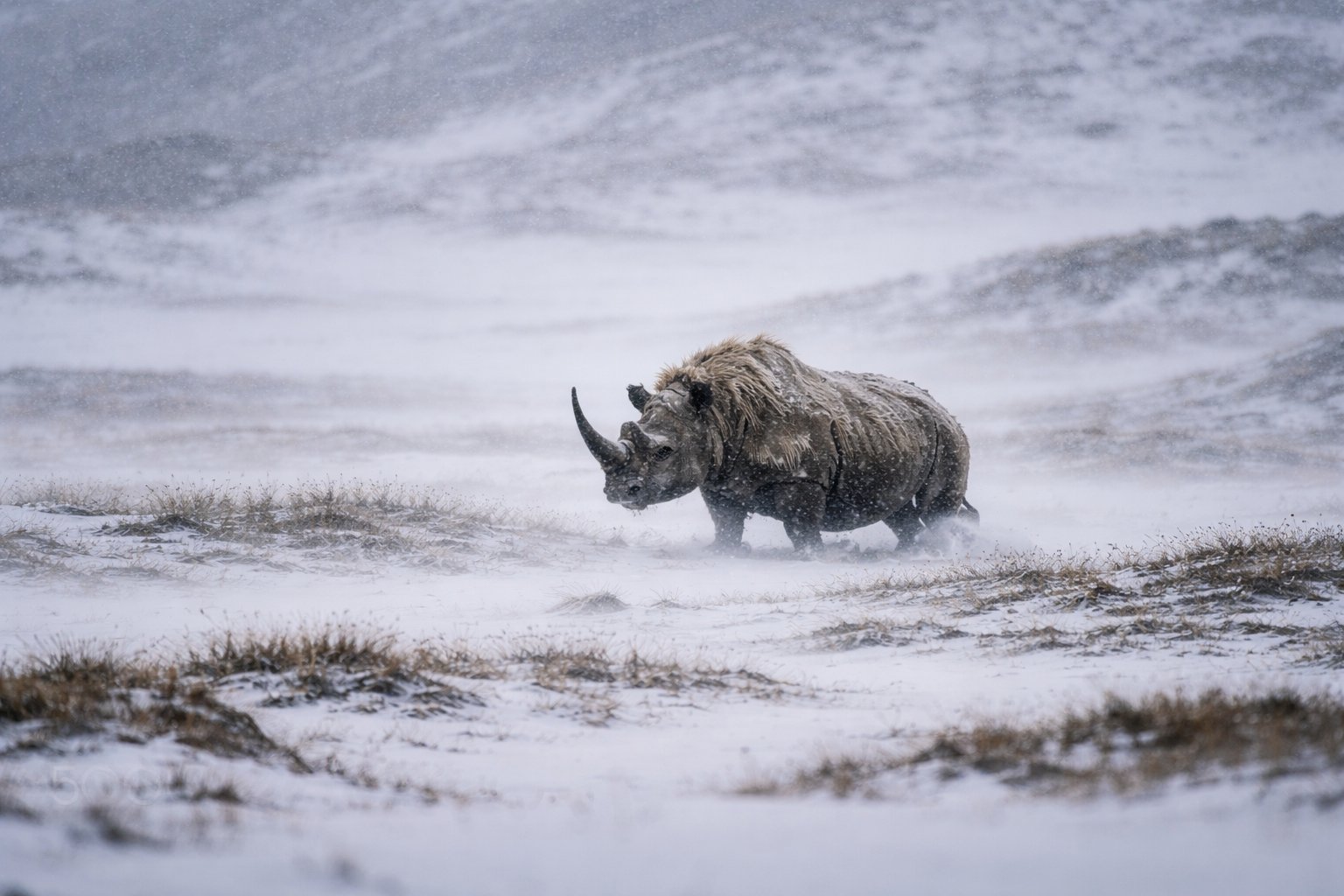
The woolly rhinoceros was among the most successful large mammals of the Pleistocene, ranging across a vast steppe-tundra ecosystem that stretched from the British Isles to Korea. Unlike modern rhinos, it was built for extreme cold: a double layer of dense fur, a thick fat layer beneath the skin, and a massive, flattened front horn believed to be used as a snow plow to expose frozen vegetation.
It shared its range with woolly mammoths, cave lions, cave hyenas, and the Pleistocene horse, together forming the iconic "mammoth steppe" fauna that dominated Eurasia for hundreds of thousands of years.
Frozen specimens recovered from Siberian permafrost have preserved the woolly rhinoceros in extraordinary detail, including stomach contents, soft tissue, skin, and even the remnants of its last meals. One specimen, the famous "Sasha" calf discovered in Yakutia in 2014, was so well preserved that its fur coloration could be determined directly: a reddish-brown.