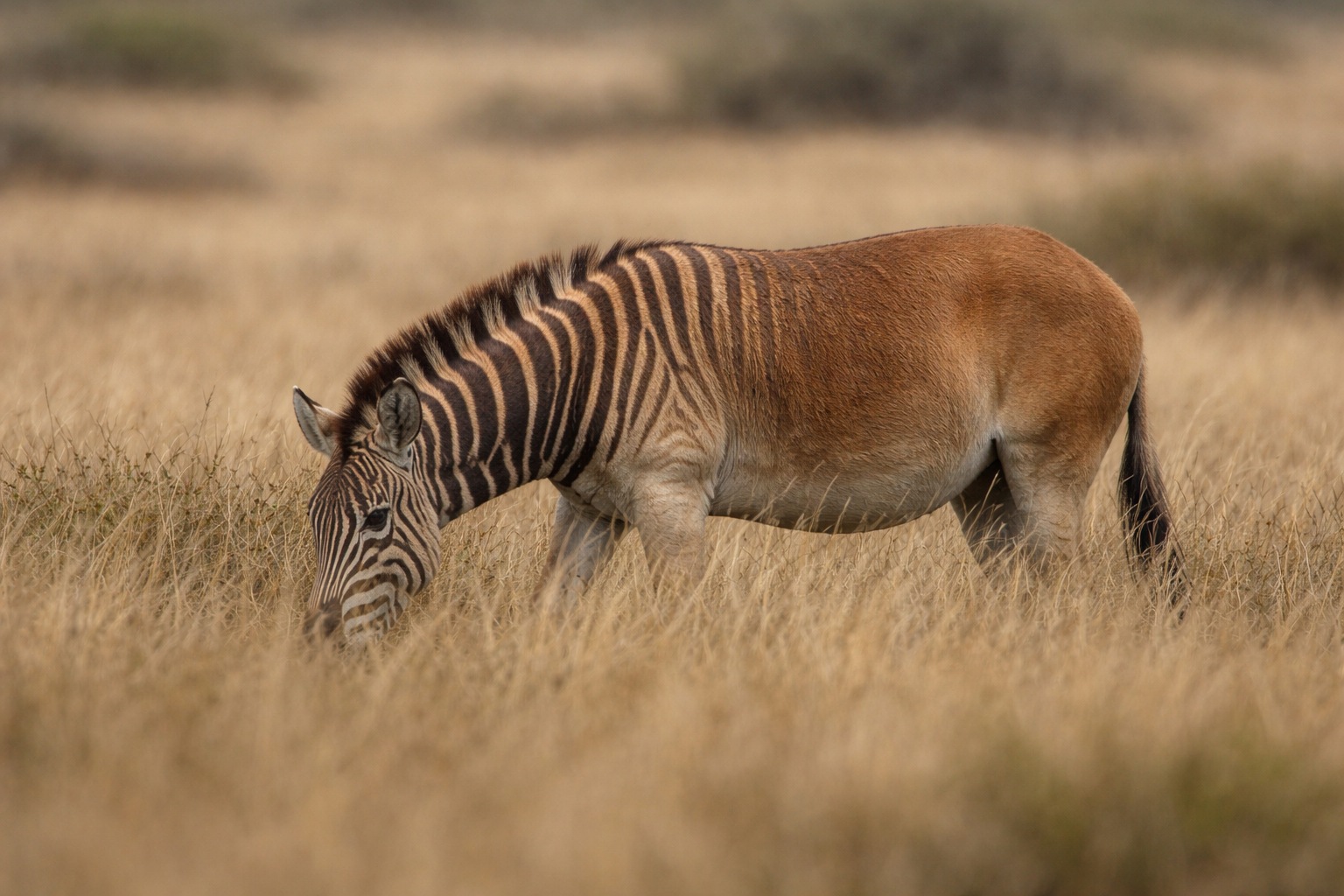
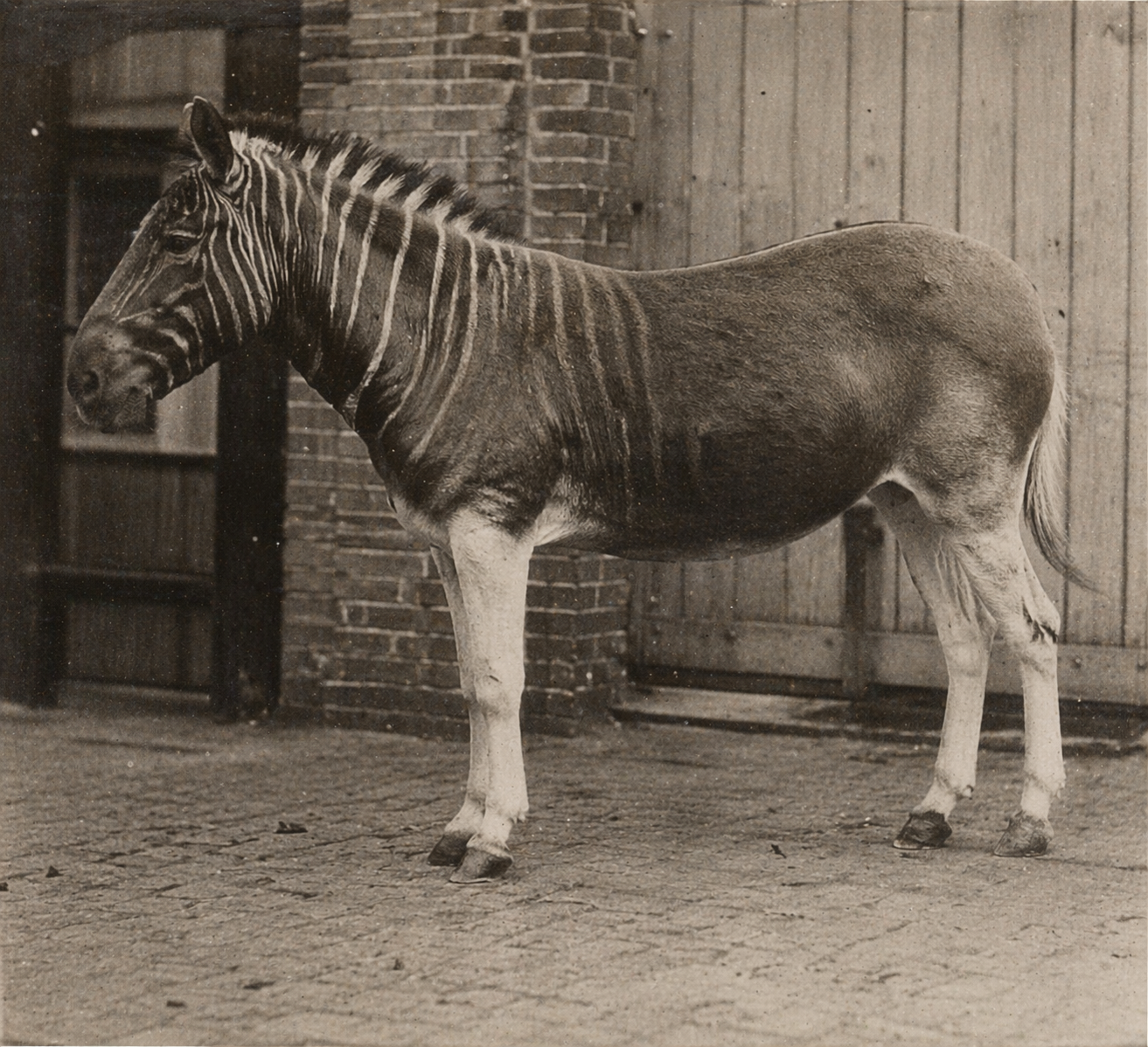
The quagga was a subspecies of the plains zebra, but its appearance was so distinctive that for much of its history, naturalists classified it as a separate species. Its striking coloration, bold stripes on the head and neck fading to a plain brown body with white legs, made it one of the most visually distinctive large mammals in southern Africa.
Quaggas inhabited the Karoo and southern Free State regions of what is now South Africa, living in herds on open grassland and scrubland. They were apparently highly social and reportedly bold enough to serve as alarm animals for domestic livestock, making a distinctive "kwa-ha" call (from which their name derives) when predators approached.
The quagga's partial stripes have fascinated geneticists: the pattern suggests that the genetic mechanisms controlling stripe expression were still present in the genome but partially suppressed. This makes it a uniquely tractable target for selective breeding-based revival. The Quagga Project in South Africa has been selectively breeding plains zebras for reduced striping since 1987, with remarkable results.