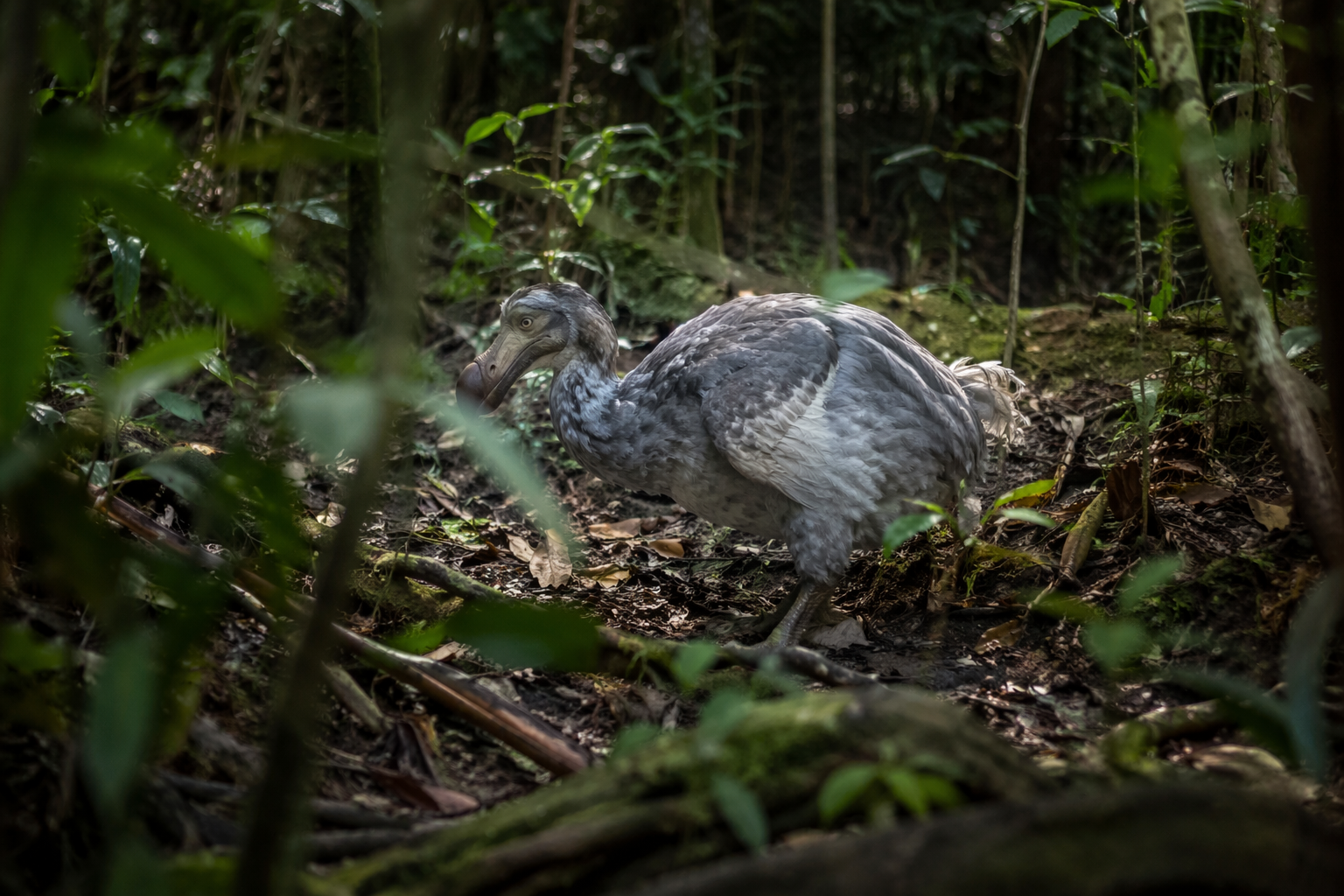
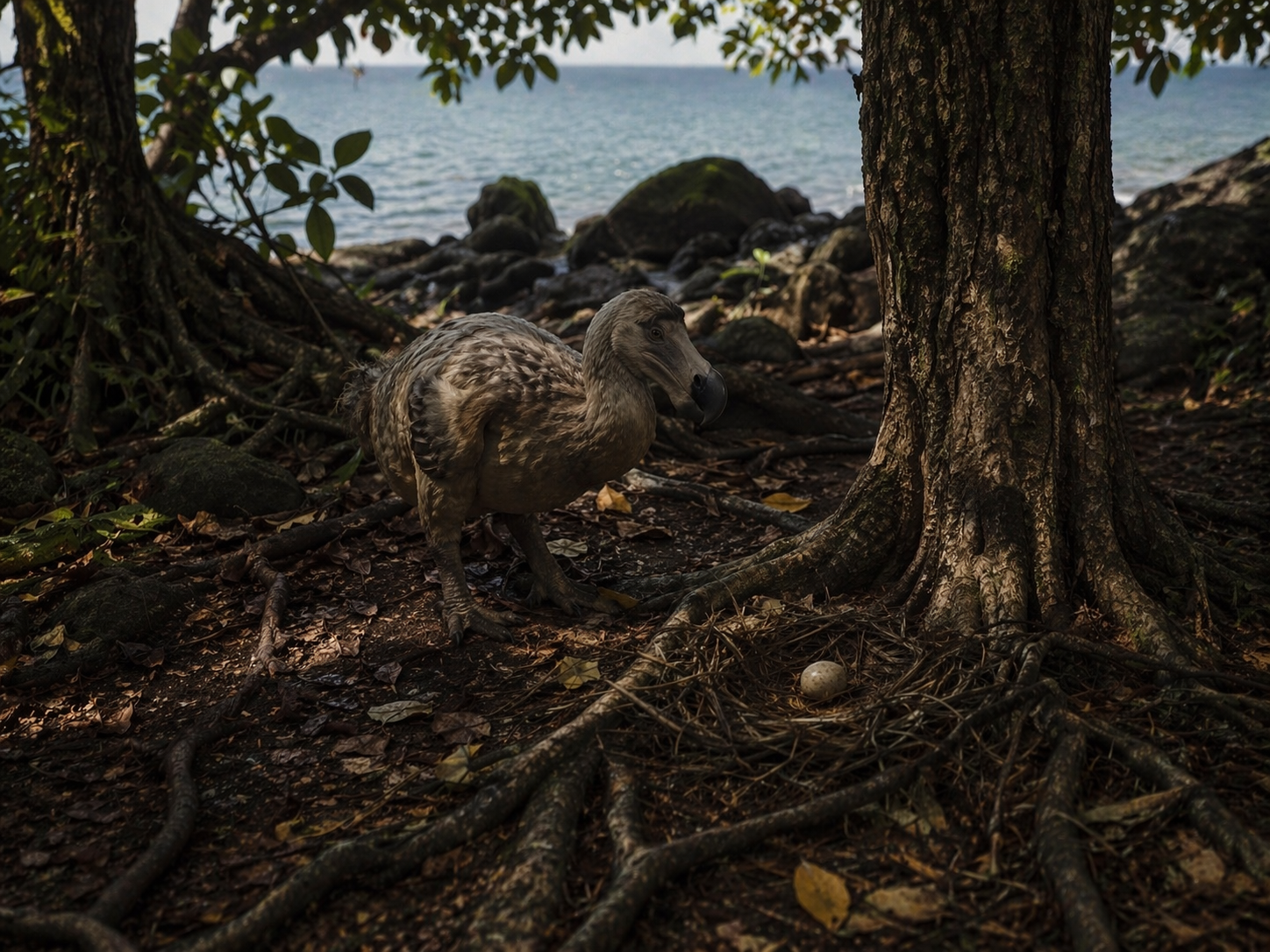
The dodo's genome was sequenced in 2022 from subfossil specimens held at the Natural History Museum in Oxford and the Naturalis Biodiversity Center in Leiden. The resulting genome is high quality by ancient DNA standards, providing a solid foundation for comparative genomic work. Mauritius's relatively warm, humid climate is not ideal for DNA preservation, making this a more challenging sequencing target than permafrost specimens.
The closest living relative is the Nicobar pigeon, and the two species share a common ancestor that lived roughly 20 to 25 million years ago. The Nicobar pigeon genome has been sequenced and serves as the primary reference for identifying the genetic changes that drove the dodo's dramatic morphological divergence: the loss of flight, the increase in body size, and the thickening of the skeletal structure.
The genetic architecture of flightlessness is of particular scientific interest. Several bird lineages have independently evolved flightlessness, and the dodo offers a case study in how rapidly this transition can occur and which regulatory pathways are involved. The dodo's bone histology also suggests a relatively fast growth rate compared to other large birds, which has potential relevance to any future revival program.
Rewild Genomics is developing comparative genomic pipelines for the dodo and Nicobar pigeon, focused on identifying the regulatory and coding variants responsible for the dodo's distinctive morphology. The Nicobar pigeon is a good living proxy because it is the closest relative, but the two species diverged long enough ago that the genomic differences are extensive and prioritization of high-impact loci is a meaningful scientific problem.
Research program: Dodo
Rewild Genomics is building comparative genomic analysis pipelines for the dodo, using the 2022 nuclear genome and the Nicobar pigeon as the reference species. Our focus is on the regulatory variants underlying flightlessness and body-size expansion, and on developing open-source methods applicable to island bird de-extinction more broadly.
The dodo's subfossil specimens are relatively recent by geological standards, which gives us good genomic coverage. The primary challenge is not data quality but analytical: distinguishing the functional variants that drove phenotypic change from the much larger background of neutral divergence accumulated over 20 million years of separation.
2022 nuclear genome
Subfossil bone specimens
Nicobar pigeon proxy
NCBI / GenBank
Flightlessness loci
Context
Colossal Biosciences announced a dodo de-extinction program in 2023, partnering with Beth Shapiro at UC Santa Cruz, whose lab produced the 2022 genome. Rewild Genomics approaches this species from a complementary angle: our open-source pipelines and methods are publicly available and designed to advance the science regardless of which organization leads the revival effort.