Rewild Genomics / De-extinction Programs / Cave Lion
Extinct · ~13,000 BP

Cave
Lion

Panthera spelaea

The largest lion to ever live, depicted with reverence in the oldest cave paintings humanity has ever made. It hunted mammoths and rhinos across a range that stretched from Britain to Alaska, and it was painted out of existence by the artists who most admired it.

~700K
Years on Earth
~1.25m
Shoulder height
~350 kg
Body mass
Carnivora
Order
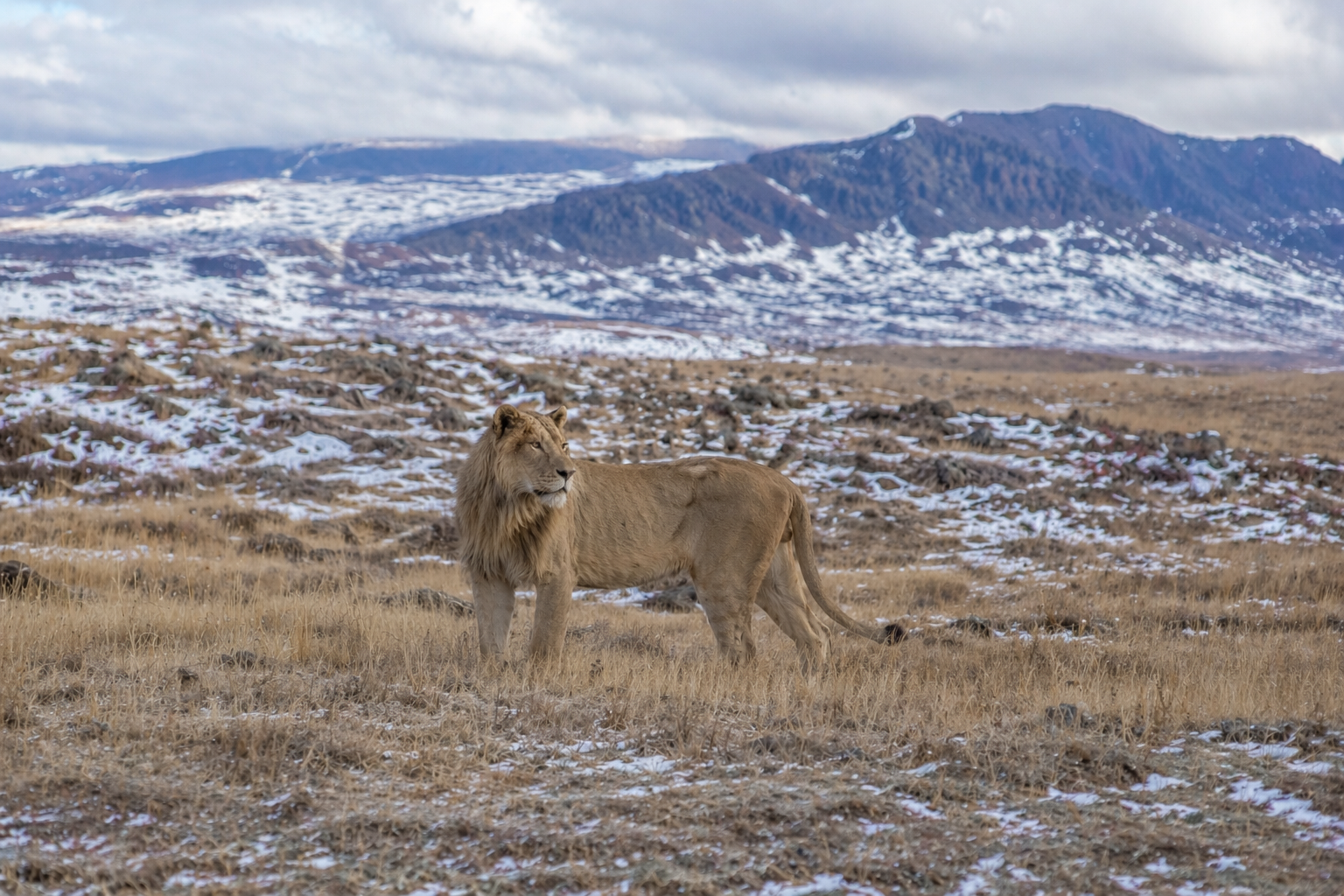
Lion in winter steppe landscape
Cave lion habitat reconstruction · Utah high desert in winter

The lion that
hunted mammoths

Panthera spelaea was approximately 10% larger than the modern African lion, the biggest felid of its era, and possibly the largest true lion that ever lived. Fossil evidence and cave art suggest it may have been paler in coloration than modern lions, possibly with faint rosette markings, and males likely had only a rudimentary mane or none at all.

Its range was extraordinary. The cave lion occupied territory across all of Eurasia, from Spain to Siberia, and crossed the Bering land bridge into North America, where it persisted into the terminal Pleistocene. Some researchers consider the North American specimens a distinct species or subspecies (Panthera atrox), the American lion, though genomic data suggests a close relationship.

As an apex predator in the mammoth steppe ecosystem, the cave lion would have hunted reindeer, horses, cave bears, and possibly young woolly mammoths in cooperative hunts and rhinoceroses. Permafrost-preserved specimens show they were powerfully built, with limb proportions similar to modern lions but heavier overall.
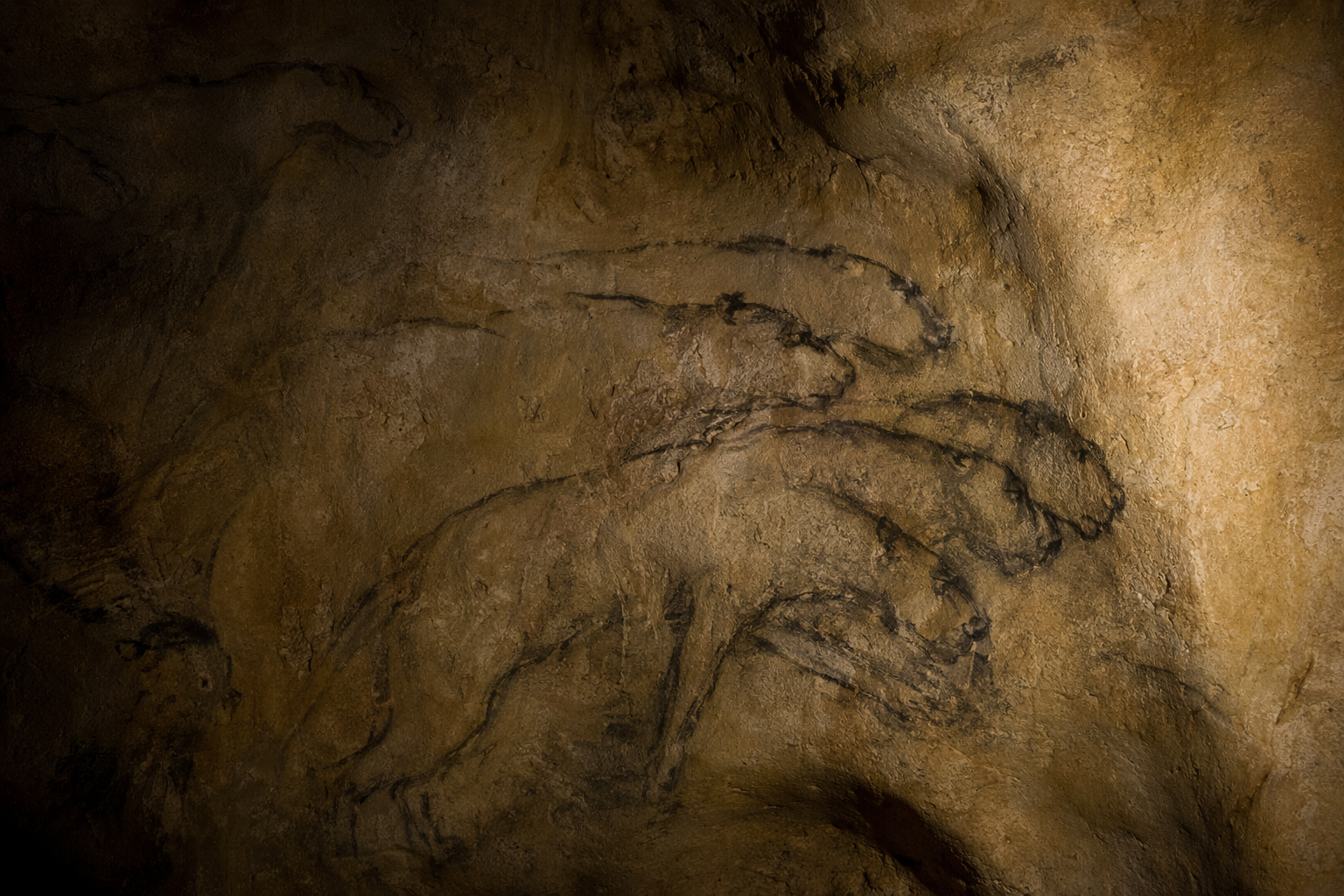
Cave lion engravings from Chauvet Cave, France, c. 36,000 BP
Chauvet Cave, Ardèche, France · c. 36,000 BP · Engraved cave lions
"The oldest animal paintings ever discovered by humans are cave lions, drawn by people who shared the landscape with them."

The cave lion holds a singular place in human artistic history. The Chauvet Cave paintings in France, dated to approximately 36,000 years ago, contain the earliest known figurative art, and lions are among its most prominent subjects. Paleolithic artists depicted them in motion, hunting in coordinated groups, with a naturalism that can only come from firsthand observation.

Two cubs, discovered frozen in Siberian permafrost in 2015 and named Uyan and Dina, represent the best-preserved large Pleistocene predator specimens ever found, with fur, claws, and whisker follicles intact. These specimens have yielded extraordinary genomic data and dramatically advanced our understanding of the species.

When the prey
disappeared

The cave lion's extinction is inseparable from the broader collapse of the mammoth steppe megafauna. As an apex predator, it was locked into a trophic cascade: when the large prey species it depended on began to vanish: mammoths, woolly rhinos, giant deer. The cave lion followed them into extinction.

This makes the cave lion both a victim of its own extinction event and a marker of it. Its disappearance around 13,000 BP coincides with the final phases of Pleistocene megafauna collapse, a period when human hunting pressure, climate change, and ecosystem unraveling converged to eliminate North America's and Eurasia's largest animals in rapid succession.

Direct evidence of human impact on cave lions is limited but suggestive. Cave lion bones in human sites are rare. It is difficult to hunt a 350-kilogram apex predator, but the animals are depicted frequently in ritual contexts, suggesting they held cultural significance. More likely, humans eliminated the cave lion primarily through prey depletion: by hunting the same large ungulates that the lions depended on, they removed the base of the food chain that supported these predators.

The exceptional preservation of the Siberian permafrost cubs, aged just weeks at death, raises one of paleontology's most poignant questions: what killed them? Genomic analysis of the specimens is ongoing, but no definitive cause of death has been determined.

~700,000 BP
Species emerges
Panthera spelaea diverges from the African lion lineage in Europe. It rapidly adapts to cold steppe environments and expands across Eurasia.
~36,000 BP
Depicted in Chauvet Cave
Paleolithic humans paint cave lions on the walls of Chauvet Cave in France, the oldest figurative art ever discovered. Lions appear in more than 70 individual panels.
~30,000 BP
Siberian cubs preserved
A litter of cave lion cubs in Siberia, named Uyan and Dina, discovered in 2015, die and are preserved in permafrost, yielding the best-preserved large Pleistocene predator specimens in history.
~20,000–13,000 BP
Prey collapse
The mammoth steppe ecosystem begins to unravel. Woolly mammoths, woolly rhinos, and giant deer populations fragment and decline under combined climate and human hunting pressure.
~13,000 BP
Extinction
The last cave lions disappear from the fossil record. Their extinction marks the end of an unbroken felid lineage that had dominated Eurasian ecosystems for 700,000 years.
Factor 01
Prey Depletion
Human hunters competed directly with cave lions for the same large prey: horses, reindeer, bison, and young megafauna. Systematic reduction of prey populations removed the ecological foundation supporting large predators.
Factor 02
Ecosystem Collapse
The cave lion was embedded in a trophic web that no longer exists. As woolly mammoths and rhinoceroses vanished, the prey base that could support a predator of this size contracted beyond recovery.
Factor 03
Climate Restructuring
End-Pleistocene warming converted the open mammoth steppe into forest and tundra, habitats less suitable for a cursorial predator adapted for open-terrain pursuit hunting across vast territories.
Genomics research

Frozen cubs,
living genome

The permafrost-preserved cave lion cubs Uyan and Dina, discovered in Yakutia in 2015 and 2017, have transformed cave lion genomics. Their extraordinary preservation, with intact fur, soft tissue, and even milk in their stomachs, has yielded high-quality nuclear genomic data that would be impossible to obtain from dry bone specimens.

Genomic analysis has definitively confirmed the cave lion as a distinct species from the modern African lion, with divergence estimated at approximately 500,000–700,000 years ago. Interestingly, the cave lion appears to have been more closely related to the modern lion than to any other big cat, placing it within Panthera leo as an extinct subspecies, or as a closely related sister species depending on the analytical framework used.

This close relationship makes the modern African lion a strong candidate proxy species. The genomic distance between cave lion and African lion is small enough that targeted CRISPR editing of a limited number of high-impact loci could theoretically reconstitute key cave lion phenotypic traits in a living animal.

Research program: Cave Lion

Rewild Genomics is developing a comparative genomic pipeline for cave lion vs. African lion analysis, targeting the genetic loci associated with cold-adaptation, coat coloration, and body size increase. The frozen cub specimens represent the highest-quality source material of any species in our program.

Our research focuses specifically on building the computational infrastructure to identify which variants in the cave lion genome explain its divergence from modern lions in phenotypically meaningful ways, laying the groundwork for CRISPR introgression design.

Permafrost specimen DNA High-quality nuclear genome African lion proxy Size & cold-adaptation loci NCBI / GenBank

Continue exploring species programs

Six de-extinction research programs, all built on publicly available genomic data.

← Back to all species