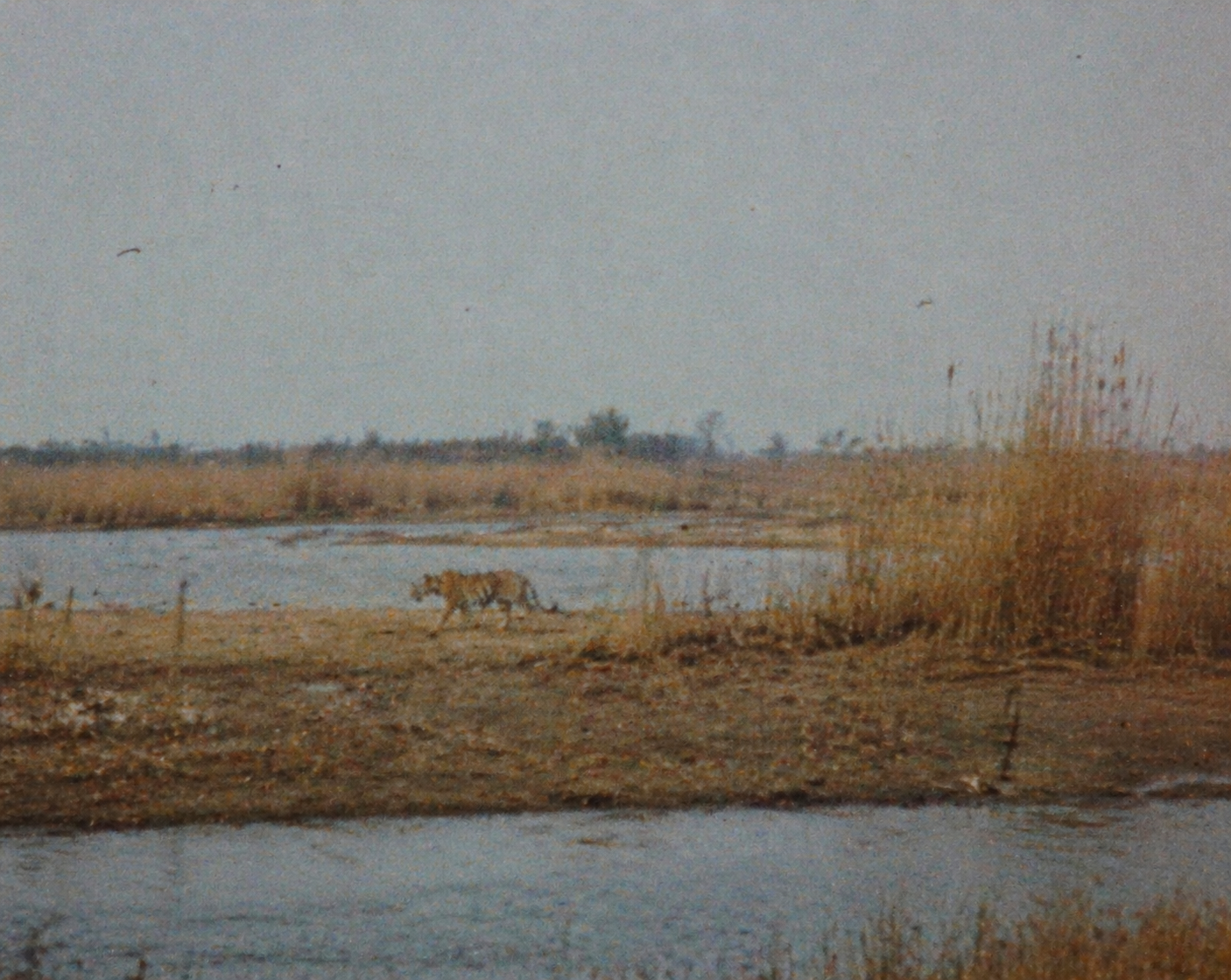
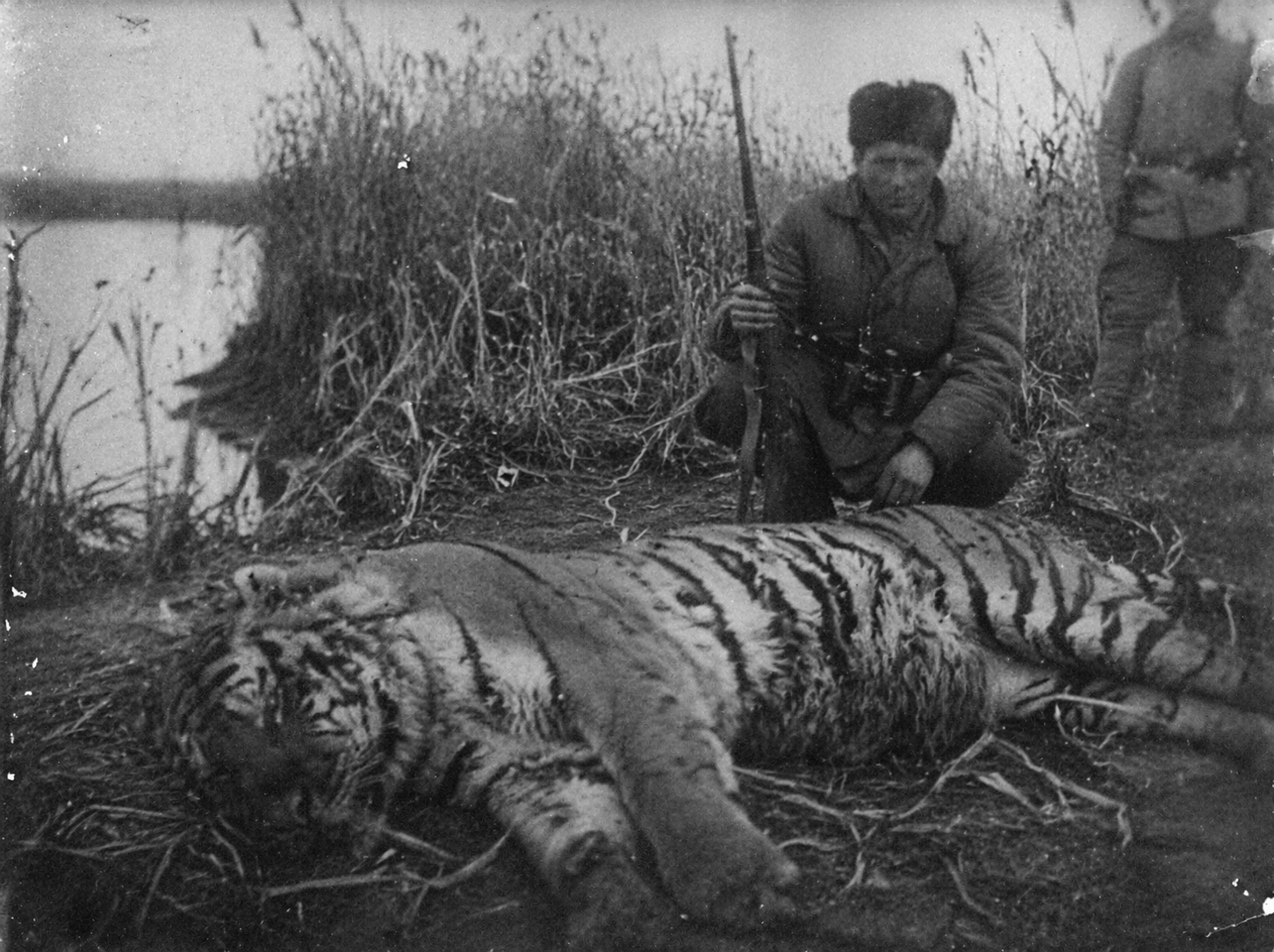
The Caspian tiger was nothing like the tigers most people picture. It did not live in tropical rainforest or mangrove swamp. Its world was the tugai forests and reed beds of Central Asian river systems: the Amu Darya, the Syr Darya, the Ili River, and their tributaries threading through the semi-arid landscapes between the Caspian Sea and western China. This was a tiger adapted to steppe winters, mountain foothills, and the dense riverside thickets that provided cover in an otherwise open landscape.
Males were very large, with some records suggesting individuals over 240 kilograms. Their winter coats were thicker and longer than other tiger subspecies, with a distinctive ruffled mane around the face and neck. They preyed on wild boar, Bactrian deer, water buffalo, and in some areas, wild horses and camels. Their ranges were vast, tracking the seasonal movements of prey across hundreds of kilometers of Central Asian steppe and mountain terrain.
The Caspian tiger was part of a connected arc of tiger populations that once stretched from the Caspian Sea east to the Pacific coast of Russia. The same genetic lineage that gave rise to the Caspian tiger spread along the river valleys of Central Asia and connected, at its eastern end, to the population that became the Amur (Siberian) tiger. This connection is not just biogeographic; it is genomic, and it has major implications for restoration planning.