Rewild Genomics / De-extinction Programs / Barbary Lion
Extinct in the wild · c. 1942

Barbary
Lion

Panthera leo leo · North Africa

The Barbary lion was the largest lion subspecies, the animal that Romans drove into the Colosseum by the thousands and that medieval sultans kept as symbols of dynastic power. It survived everything antiquity and the Middle Ages could throw at it, then went extinct in the Atlas Mountains within two generations of modern rifle use.

c. 1942
Last wild record
~270 kg
Male body mass
Atlas Mtns.
Final range
Panthera leo
Species

The lion of
the ancient world

The Barbary lion ranged across the entire North African coast from Egypt to Morocco, through the Atlas Mountain forests of Algeria, Tunisia, and Morocco. It was a large, heavily built lion with a distinctively full mane that extended back along the belly and under the body. Males were substantially larger than any living African lion population, with some historical records suggesting individuals exceeding 270 kilograms.

Unlike savanna lions, Barbary lions inhabited a Mediterranean and montane environment: dense cedar and oak forests, rocky slopes, seasonal river valleys. They hunted Barbary deer, wild boar, and Atlas bear. They had to be adapted to cold winters, snow at altitude, and a prey base very different from the open-grassland ungulates that East African lions are associated with today.

The Barbary lion's cultural history is extraordinary. It was the lion of the Roman games, imported by the thousands from North Africa for arena spectacles. It was kept in the menageries of Moroccan sultans at the royal palace in Fez for centuries, which may have preserved captive animals long after wild extinction. It appears in ancient Egyptian art, Phoenician carvings, and medieval Moroccan manuscripts. No other large carnivore has such a well-documented human cultural relationship.

Whether any Barbary lion descendants survive in captivity is an active scientific question. A group of lions held at Rabat Zoo in Morocco are believed by some researchers to be descended from the royal Moroccan collection. Genetic studies have produced mixed results, with some analysis supporting Barbary ancestry and other studies finding no clear signal. This population is being carefully assessed as a potential source for future restoration work.

Reconstruction of a Barbary lion in Atlas Mountain cedar forest

Artist's reconstruction, Panthera leo leo in Atlas Mountain cedar forest, Morocco

"The last confirmed wild Barbary lion was shot in the Atlas Mountains of Morocco in 1942. The species that outlasted the Roman Empire fell to a century of colonial hunting."

The geographic isolation of North Africa meant Barbary lions evolved distinctly from sub-Saharan populations. Genomic data confirms that the Barbary lion represents a genetically distinct lineage within Panthera leo, not simply a regional variant of the African lion. This distinction matters for any future restoration program: reconstructing the correct genetic background, not just lion-shaped phenotype, is the scientific target.

Hunted out of
the last mountains

The Barbary lion's decline maps almost precisely onto the expansion of French and Spanish colonial administration across North Africa in the 19th and early 20th centuries. Colonial settlers viewed lions as threats to livestock and as trophy animals, and they had access to modern rifles for the first time. Local authorities actively organized lion hunts and paid bounties. The Atlas Mountain populations, already isolated and fragmented, could not withstand sustained pressure from hunters who could now reliably kill from a distance.

The last confirmed wild Barbary lion was shot in Morocco in 1942. Algeria had lost its population decades earlier; Tunisia's last documented record was 1891. The species that had survived the extraction of thousands of individuals for Roman arenas over several centuries could not survive 80 years of rifle hunting in a colonized landscape.

The complexity of the extinction is that captive animals may have preserved some genetic continuity. The royal collection at the Fez palace held Barbary lions for centuries, and some of these were transferred to the Rabat Zoo in the 20th century. Whether these animals represent true Barbary lion lineage or admixed captive stock is still being resolved through ongoing genomic analysis. The answer has real implications for whether a genetically authentic restoration is possible from living animals rather than from museum specimens.

Roman period
Mass extraction for arenas
Roman administrators export Barbary lions in large numbers for arena spectacles across the empire. This represents significant pressure on coastal populations but does not appear to have caused widespread collapse; lions persist across North Africa for another 1,800 years.
16th–18th century
Royal Moroccan collection
The Moroccan royal family maintains a collection of Barbary lions at the palace in Fez. This practice continues for centuries and may have inadvertently preserved animals long after wild populations were critically reduced.
1830–1900
Colonial hunting pressure
French colonization of Algeria and Tunisia brings European settlers and modern rifles. Colonial administrations organize lion hunts, pay bounties, and treat large predators as enemies of agricultural expansion. Tunisia's last lion is recorded in 1891.
Early 1900s
Algeria extirpated
The Algerian Barbary lion population is eliminated. Only the Atlas Mountain populations in Morocco remain. These animals are increasingly isolated in high-altitude cedar forests, cut off from each other by agricultural lowlands.
1942
Last wild individual
The last confirmed wild Barbary lion is shot in the Atlas Mountains of Morocco. Some researchers believe small groups may have persisted into the 1950s or 1960s, but no credible documented sightings exist after 1942.
Factor 01
Colonial Hunting Programs
French and Spanish colonial administrations in North Africa actively organized lion eradication campaigns, paid bounties, and provided military support for hunts. Modern rifle technology made individual lions easy to kill at distances that eliminated the lions' own threat. This was systematic, state-organized removal.
Factor 02
Habitat Fragmentation
Colonial agriculture transformed the North African lowlands, eliminating the prey base and movement corridors that connected Atlas Mountain lion populations. Lions were pushed into increasingly isolated upland refugia where small populations were more vulnerable to chance events and hunting pressure.
Factor 03
Prey Depletion
The same hunting culture that targeted lions also reduced Barbary deer, wild boar, and other ungulate prey species. Lions competing with humans for a shrinking prey base faced starvation pressure on top of direct persecution. The two factors compounded each other across the 19th century.
Historical archive

Through the
photographic record

The Barbary lion is among the few recently extinct megafauna documented across multiple visual media — from ancient Roman illustration to 19th-century wet plate photography. These records are primary evidence for morphology, range, and the forces that drove extinction.

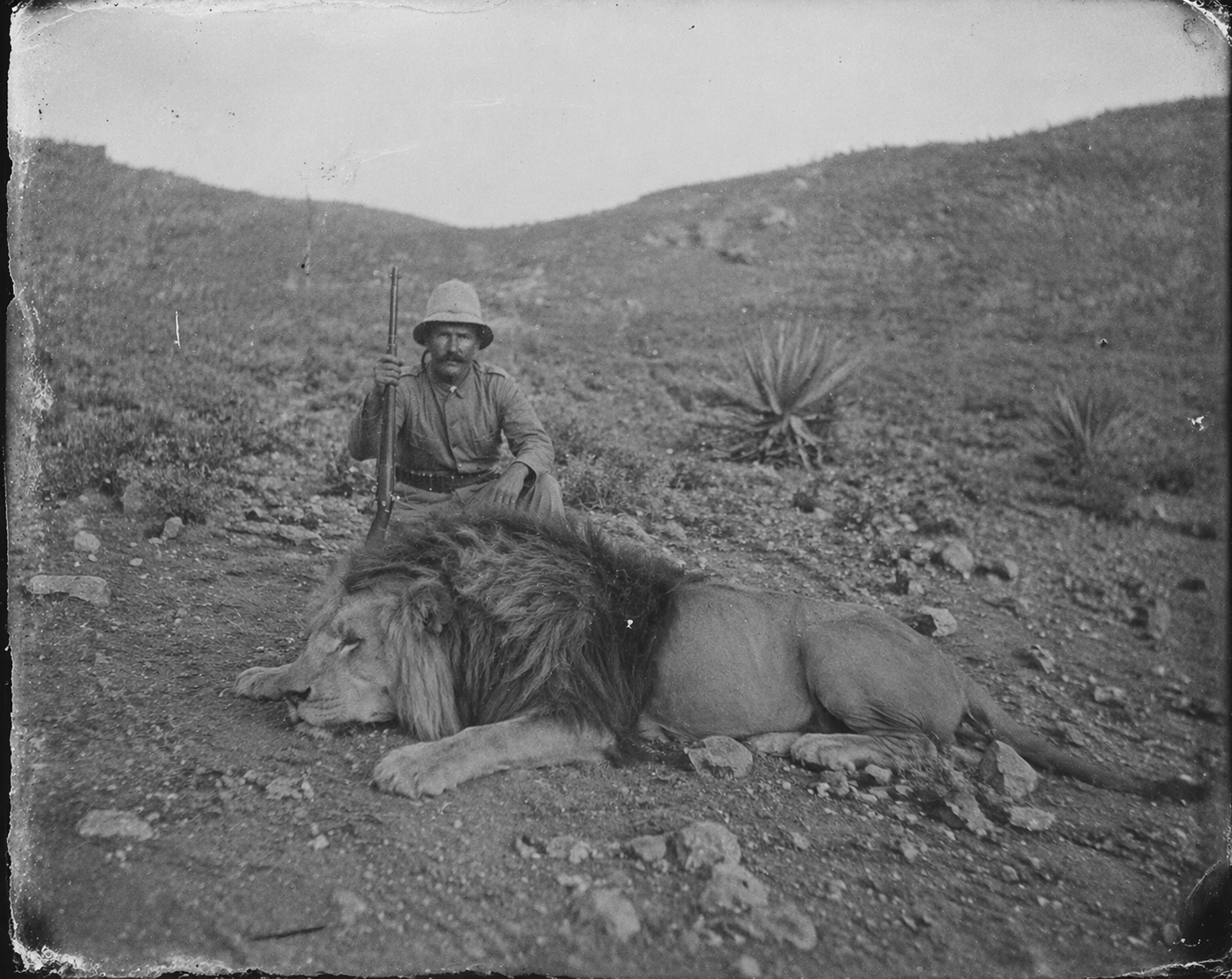
Colonial-era trophy hunter with Barbary lion, North Africa
c. 1890s · Colonial North AfricaA colonial hunter with a Barbary lion in rocky scrubland. The dense, dark mane extending well behind the shoulders is characteristic of the subspecies. French and Spanish colonial administrations organized systematic hunts across Algeria, Tunisia, and Morocco throughout this period.
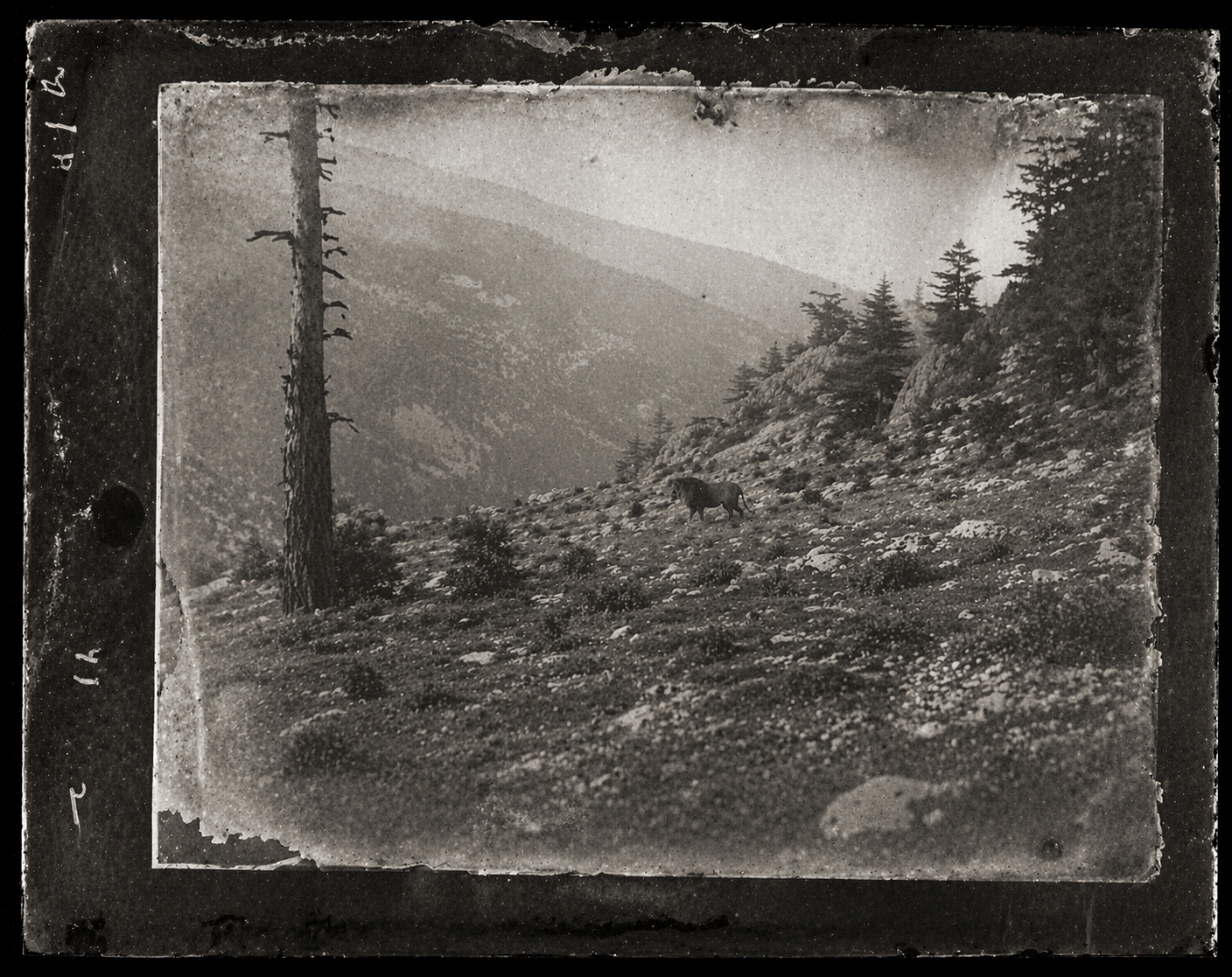
1916 French expedition photograph, Atlas Mountains
1916 · Atlas Mountains, MoroccoA Barbary lion on rocky montane terrain during a French expedition. The cedar and scrub forest habitat visible here is the final Atlas Mountain refuge where the subspecies persisted until 1942. The environment is strikingly different from the open savanna associated with East African lions.
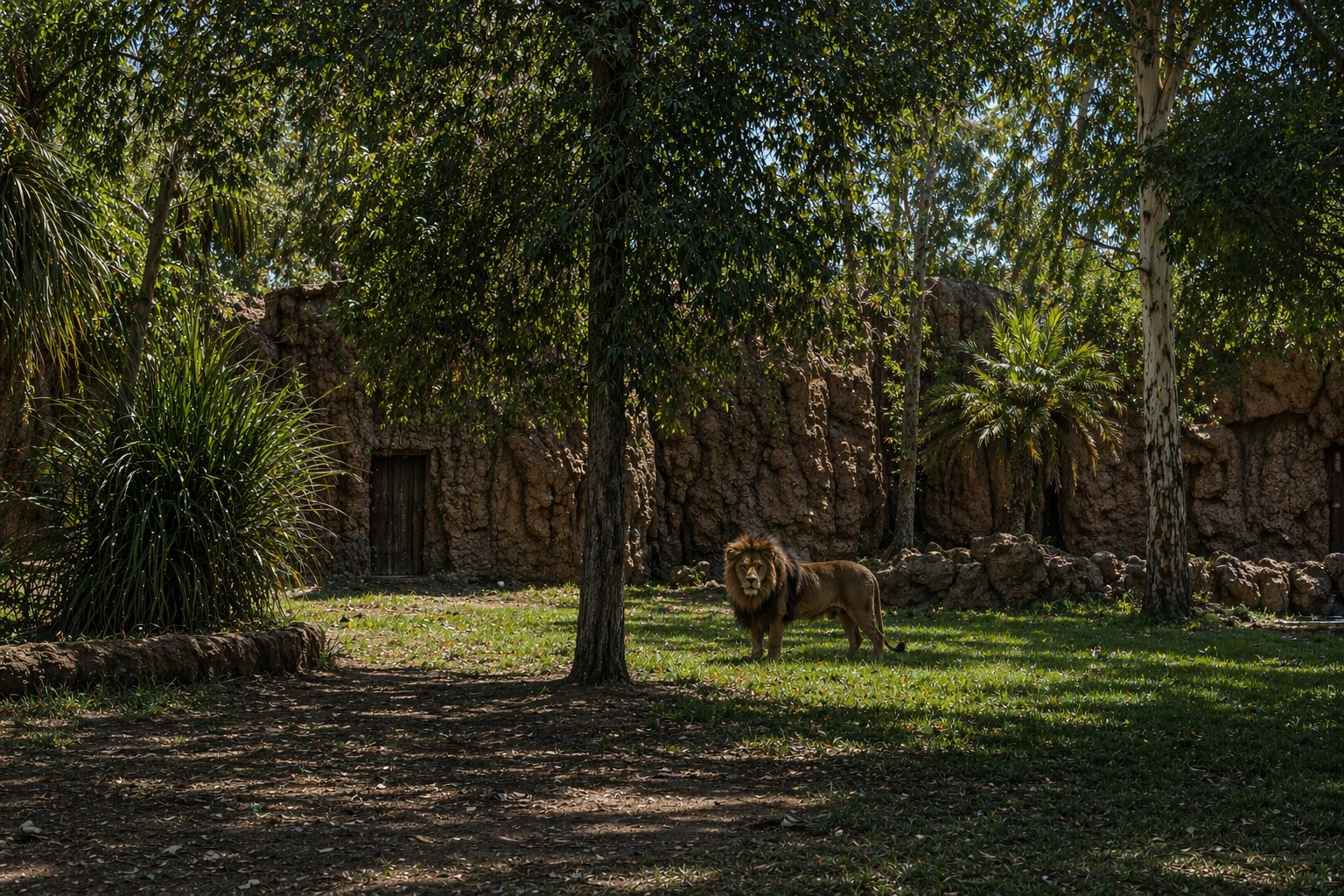
Moroccan royal collection lion, Rabat Zoo descendant
Contemporary · Rabat Zoo, MoroccoA lion from the Moroccan royal collection, the population believed by some researchers to carry Barbary ancestry. The Moroccan royal family maintained Barbary lions at the Fez palace for centuries; these animals were later transferred to Rabat Zoo. Ongoing genomic analysis is assessing whether true Barbary lineage persists.
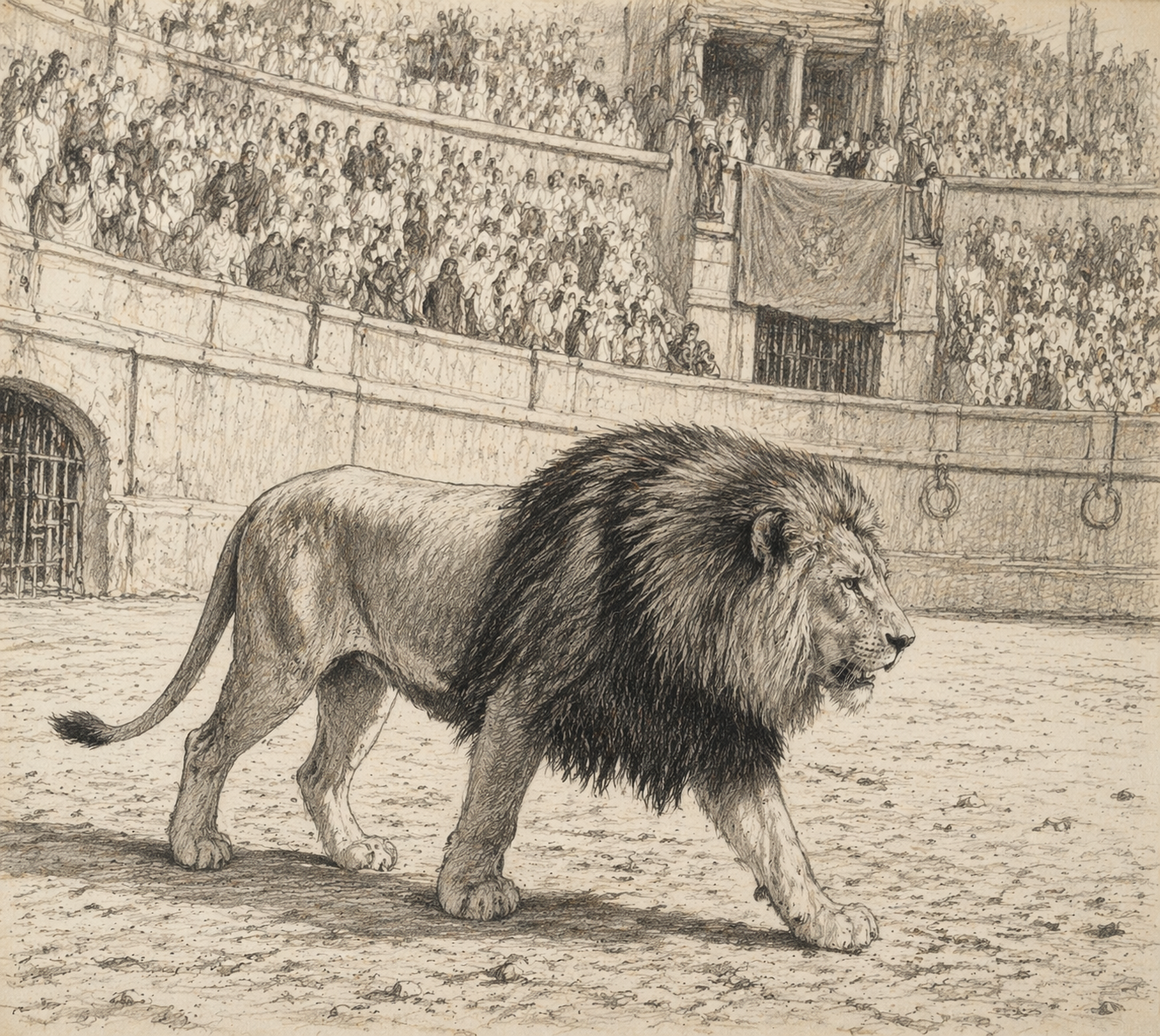
Historical illustration of Barbary lion in Roman arena
Historical illustration · Roman arena contextA detailed rendering of a Barbary lion in a Roman arena setting. Roman administrators extracted lions from North Africa by the thousands for gladiatorial spectacle — historical records document shipments running into the hundreds per event. The subspecies survived this extraction pressure for centuries before falling to 80 years of colonial rifle hunting.
Genomics research

A distinct lineage
in museum specimens

The Barbary lion's genomic characterization is more advanced than many recently extinct subspecies. Museum specimens exist in good numbers, and several institutions hold historical skins, skulls, and mounted specimens collected in the 19th and early 20th centuries. Mitochondrial and nuclear genomic data have been extracted from multiple specimens, confirming that the Barbary lion represents a genetically distinct North African lineage of Panthera leo.

The primary scientific question is the relationship between Barbary lions and the broader Panthera leo species complex. Modern lion taxonomy recognizes two main subspecies: Panthera leo leo (including North and West African and historical Asian lions) and Panthera leo melanochaita (eastern and southern African lions). This means the Barbary lion's closest living relatives include the West African lion and the Asiatic lion, both critically endangered, rather than the East African lions most people picture when they think of lions.

The Rabat Zoo population is genomically interesting regardless of its Barbary ancestry status. If any Barbary genetic lineage persists in these animals, they are a living tissue source for reference genomics. If they are admixed or not Barbary at all, characterizing this precisely is still valuable for understanding what has been conserved in captivity versus what must be reconstructed from museum specimens.

Rewild Genomics is developing comparative genomic pipelines for the Barbary lion using museum specimen data and publicly available Panthera leo reference genomes. Our focus is on characterizing the genetic distinctiveness of the Barbary lineage, identifying the variants responsible for its distinctive morphology, and building the analytical foundation for any future restoration effort.

Research program: Barbary Lion

Rewild Genomics is building comparative pipelines for Barbary lion museum specimens against published Panthera leo reference genomes, with the goal of precisely characterizing the genetic distinctiveness of the North African lineage. We are also tracking the ongoing analysis of the Rabat Zoo population to assess whether any living Barbary ancestry persists in captivity.

The Barbary lion occupies an unusual position among de-extinction targets: it is a subspecies of a living species, which means the genetic gap between the extinct form and its closest living relatives is smaller than for most targets. This makes the Barbary lion a more tractable restoration project from a genomic standpoint, though the ecological and political challenges of restoring a large predator to North Africa are substantial.

Museum specimen DNA Panthera leo reference genome Rabat Zoo population NCBI / GenBank North African lineage
Context

No active large-scale de-extinction program is currently focused on the Barbary lion, though conservation researchers at Oxford, Durham, and several North African institutions have published genomic analyses of museum specimens and potential captive descendants. Rewild Genomics builds open-source tools to support and extend this work as the field develops.

Continue exploring species programs

De-extinction research programs built on publicly available genomic data.

← Back to all species